
During the recent Men’s World Cup, many American fans kept hearing a phrase soccer commentators love.
Ask the question.
It means putting the defense under pressure. Make the run. Create the chance. Put the defense in a position where it has to decide. Ask the game a question and see how it answers.
I hope we take the phrase with us beyond the World Cup.
What kind of country are we? What kind of country do we want to be? What are we willing to do to get there?
The World Cup told us a lot this summer. Some of it was beautiful.
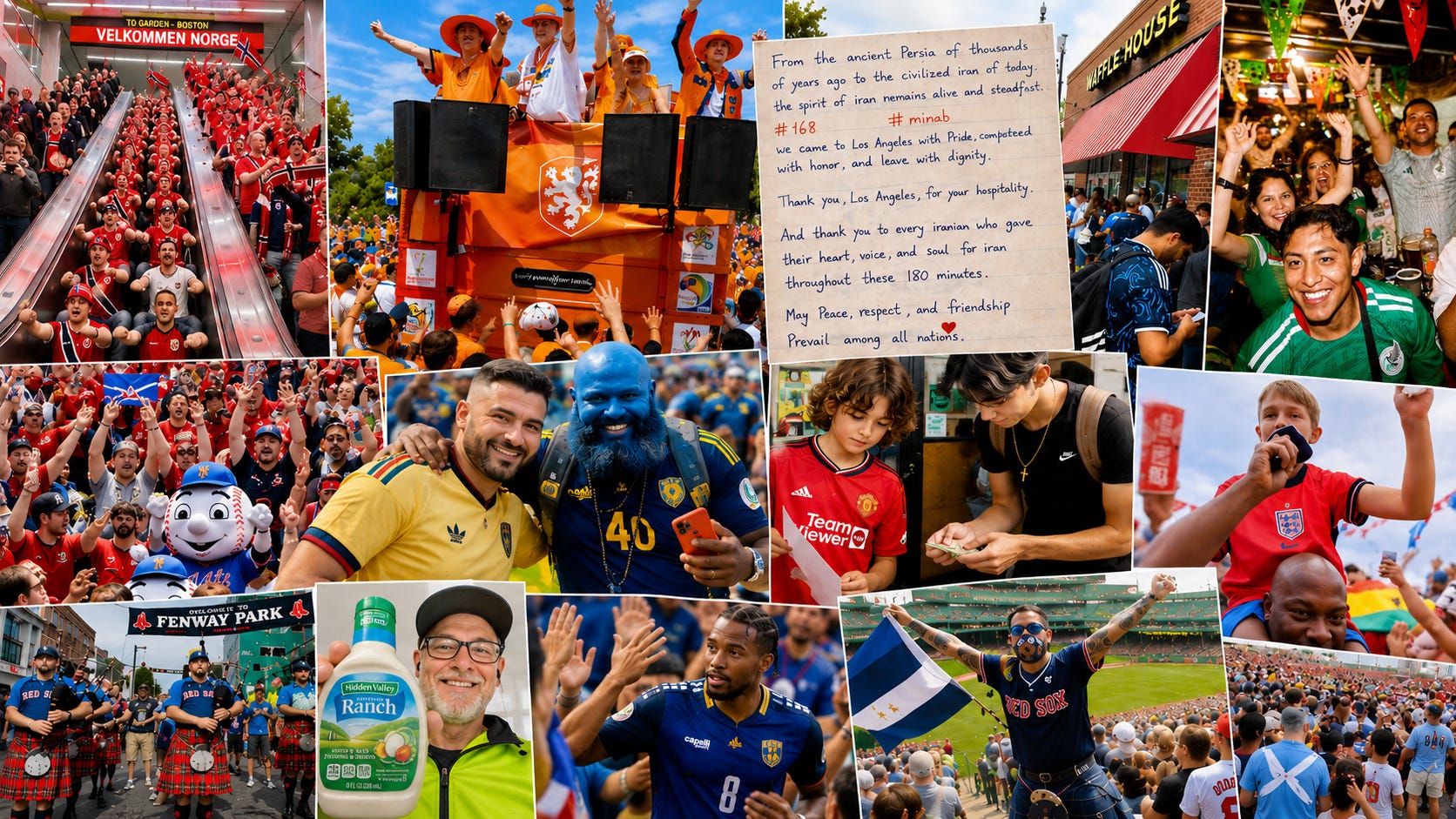
Visitors arrived uncertain about how they would be received. More often than not, they found Americans, the people they met in restaurants, neighborhoods, stadiums, and airports, to be welcoming. They fell in love with Waffle House, baseball games, ranch dressing, and all sorts of things Americans tend to take for granted, or fear we might be mocked for. Kids in the Midwest traded Panini World Cup stickers across language barriers. My soon-to-be first-grade nephew made a flag for every country in the tournament. Before each match he watched, he hung the flags of the two teams that were playing. He learned about those countries, about geography, and his world got bigger. The world’s fans arrived hesitant, and more often than not, we showed up for them.
The expanded 48-team field gave us Curaçao and Cape Verde, and other debutants on the world stage. It gave us Mexican fans iconically singing “Cielito Lindo” and Scottish supporters belting out “Sweet Caroline” at a Red Sox game. It gave us the particular connection sport creates when people who might never otherwise share a room find themselves sharing something that matters — cheering, singing, laughing, hurting together. That might have been in a stadium, at a watch party, in a bar, or alone on a couch, always knowing tens of millions of people around the world were sharing it too.
Not everything we saw reflected the best of us.
Surge pricing kept ordinary fans out of games that should have included them. Our government intervened in ways that had no place in sport. A phone call was made. A red-card suspension was reversed for the first time since 1962. Some Americans who had been rooting for their team then found themselves rooting against it, not against the players, but against what the interference represented.
A Somali referee with a valid visa was denied entry and could not do his job. An Egyptian team staff member was harassed by an airport employee while a child waited to take a photograph with a player. The Iranian team was required to leave after its matches and return to Mexico. They were separated from the community of the tournament in ways no other team was. Still, its members left a gracious thank-you note in the Los Angeles locker room.
These things happened here. At our World Cup. They are part of the answer. They leave us with more questions too.
So who are we?
Are we Lawrence, Kansas? The city that embraced the Algerian national team like honored guests?
Or are we the officials who made Iran feel unwelcome from the moment its team arrived?
Are we the children trading stickers across language barriers?
Or are we the surge pricing that said this moment belonged only to people who could afford it?
The answer is that we are both. We have always been both. The question is which version of ourselves we choose to amplify, fight for, and build toward.
The U.S. women’s national team has been asking that question for decades. Earlier generations fought for equal pay, fair treatment, adequate resources, and the right to be valued, creating conditions today’s players can inherit rather than fight for all over again. Now this generation must decide what it will build for the next.
On The RE-CAP Show with Tobin Heath and Christen Press, Sam Coffey quoted James Baldwin, “I love America more than any other country in the world. And that’s why I insist on criticizing her perpetually.” Coffey continued in her own words,”I love this place and I love this team and I love this country. But we’re not at our best right now. And I want it to be for everyone.”
Christen Press, whose generation helped build what the current team is inheriting, put the responsibility plainly, “The world needs a great U.S. women’s national team, not just in the winning, but also in standing for the values that this country represents that are right now getting clouded by other things.”
The work passes from one generation to the next. Love the country. See it honestly. And leave it closer to what it claims to be.
In soccer, asking the question means forcing the defense to respond. You do not wait for permission. You make the run and see what happens.
Life asks the same of us. So does being an American. We ask, answer, and act: in our families, our neighborhoods, our communities, at the ballot box. When we live the answers, we encourage others to ask the question too.
The years ahead will give us countless chances to answer. Every generation gets its turn. Every community does. Every one of us does. We answer it every time we choose whether to widen the circle or draw it tighter, whether to welcome or to exclude, whether to see one another or look away.
LA28 is coming. The first Summer Olympics on American soil in more than 30 years. Once again, the world will arrive wondering who we are and how it will be received. But those questions won’t belong only to our visitors. Many Americans will still be asking those questions, too. Between now and then, we have time to keep asking, and answering, our own.
By then, perhaps we will know more of our answers, not because we said them, but because we lived them: in stadiums and living rooms, in neighborhoods and polling places, and in every small act of seeing one another or looking away.
When the flame is lit and the world is watching, may Americans and visitors alike recognize the best of who we are.
Ask the question.
Answer it honestly.
Then do the work to make the answer true.
That is the whole game.